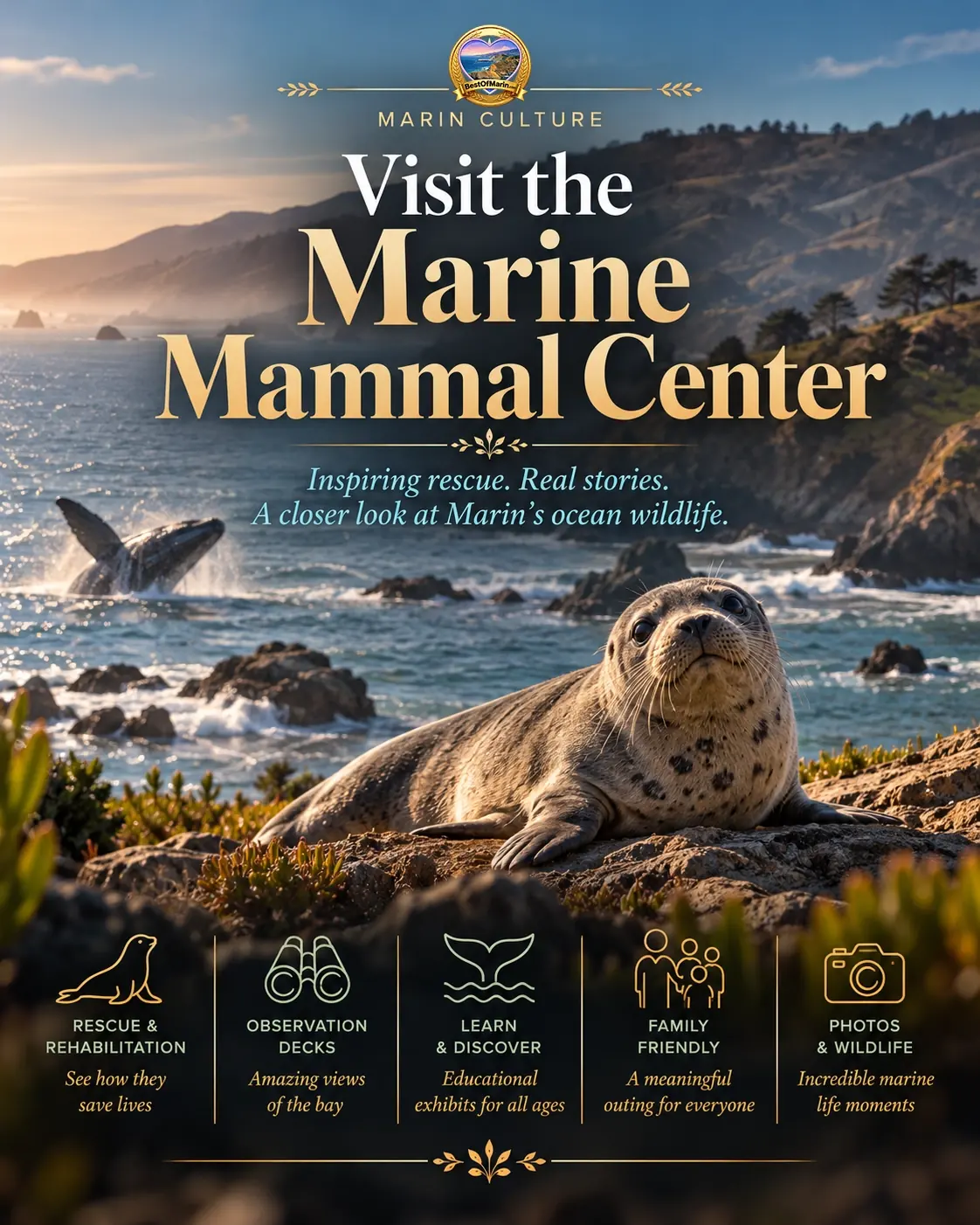
Visit the
Marine Mammal Center
Come for a closer understanding of seals and sea lions. Leave seeing the coastline differently. This Headlands outing connects a beautiful place with the people working to protect its wild neighbors.
By Best of Marin Staff · Reviewed
A different kind of wildlife outing
Think hospital, not performance
The Marine Mammal Center’s work brings rescue, rehabilitation, research, and education together. Its purpose is not to put animals on display for a show. That distinction makes the visit more interesting: you are learning what it takes to help wild animals, not waiting for them to entertain you.
Set expectations before arriving. Do not promise children a particular animal, a feeding demonstration, or a close encounter. The whale in your mental picture of “marine mammals” is not a promise of whales onsite, either.
For locals, this is a chance to connect familiar beaches with a bigger conservation story. For visitors, it is an outing with substance beyond another scenic photograph.
Make the practical decisions first
Choose the experience you actually want
Read the official tours and programs page alongside admission information. If patient viewing is your priority, confirm the current viewing arrangements and select the appropriate tour rather than assuming a general-admission ticket includes every area.
Keep your confirmation handy and follow its arrival instructions. Our planning suggestion is 60–90 minutes for a relaxed visit, adjusted around the program you book. Add a buffer for driving and parking instead of squeezing the visit between fixed commitments.
Navigate to the Headlands, not the waterfront
The Sausalito address can be misleading if you picture downtown shops and ferry arrivals. Use the Center’s exact address and its official directions. Do not make a last-minute scenic detour before your booked arrival.
Download directions ahead of time. If using a taxi or rideshare, the Center recommends arranging both directions in advance because return waits can be long. A one-way drop-off is not a complete transportation plan.
Access needs and pets deserve advance planning
The official FAQ identifies placard parking at the top of the hill near the entrance. Contact the Center about your specific mobility or sensory needs before choosing a program; do not assume every viewing experience has the same access.
Pets are not permitted around the facility’s public areas; fully immunized service animals are the stated exception. Plan a pet-free outing rather than leaving an animal waiting in the car.
How to get more from the visit
Follow one story instead of rushing through everything
Pick one question to carry through the visit: How does an animal arrive here? What makes it ready to return to the ocean? How does caring for one patient help researchers understand others?
Ask an educator which information is most useful for a first-time visitor. If an area is unavailable or an animal is resting out of sight, let the learning—not a sighting checklist—be the point.
A simple family challenge
Give everyone three things to find: one new fact, one question for an educator, and one action they can take at home. Younger children can draw their favorite discovery afterward; older children can explain the difference between helping wildlife and approaching it.
The Center’s education guidance emphasizes quiet voices, walking, and staying together. Explain these as part of helping patients rest, not merely rules to obey. There are no hands-on animal interactions.
Bring curiosity, not a promise of perfect weather
Dress for a coastal day even if your starting town is warm. A wind-resistant layer is more useful than discovering halfway through your outing that everyone wants to return to the car.
Sort out food beforehand and check where eating is permitted. For our suggested itinerary, have a snack before arrival and save a picnic or meal for afterward. A hungry group is rarely an attentive one.

The easy half-day: Center first, coast second
Give the booked visit the best part of your energy
Start with your reservation, allowing time to arrive calmly. Explore at your group’s pace, then pause afterward to share what surprised you. That short conversation can be the difference between a pleasant stop and something everyone remembers.
Keep the rest of the day flexible. If the group is cold, tired, or absorbed in the visit, you can skip the extra outing without missing the point.
Add Rodeo Beach if conditions cooperate
Nearby Rodeo Beach and Lagoon makes a natural next chapter: see the coast after learning about its wildlife. NPS notes busy weekend parking, strong currents, and a prohibition on swimming in the lagoon. Plan a shoreline look or picnic, not a swim.
Allow an hour or more for an unhurried extra stop, including parking and walking. That is our suggested budget, not a fixed route time. Keep children away from the surf, follow posted closures, and stay on designated paths.
Finish with food, not another checklist
If you prefer a sit-down meal, make Sausalito a separate stop and check opening hours before heading over. For locals, heading straight home after the beach can be just as satisfying. One thoughtful visit and a little ocean air is a complete day.

Take one useful habit home
Know who to call; do not attempt a rescue
If you encounter a marine mammal that may need help, give it space and keep people and pets away. Do not touch, feed, or push it toward the water. Use the Center’s animal reporting guidance and let trained responders advise you.
For the Center’s California response area, its listed hotline is 415-289-7325. Note the location and what you observed from a safe distance. A quiet, accurate report is more helpful than a crowd gathering for photographs.
Make the good intention specific
Choose one manageable action after your visit: secure rubbish so it cannot blow away, reduce disposable items on your next picnic, or explore the Center’s volunteer opportunities. If you want to donate, go directly through its official website.
A good visit does not end with knowing more animal facts. It ends with being a more considerate neighbor to the ocean.
Marine Mammal Center visit FAQ
Is admission free, and do I need a reservation?
The Center lists free general admission with advance online tickets required. Check its official Visit page for your date and review guided-tour options separately.
Will we see whales or touch the animals?
Do not plan on whale viewing or hands-on animal encounters. This is a wildlife hospital, not a petting attraction. Review the current patient-viewing and tour arrangements before booking; animal care comes first.
How much time should we allow?
Our suggested starting point is 60–90 minutes for an unhurried visit, adjusted to your booked program. Add travel and parking time, and another hour or more if you want a relaxed nearby beach stop. These are editorial planning estimates.
Can we bring a dog?
Pets are not permitted in and around the Center’s buildings and public areas. Its policy makes an exception for fully immunized service animals. Check the current policy if that applies to your visit.
Is the Center in downtown Sausalito?
No. Its address is 2000 Bunker Road, Fort Cronkhite, Sausalito, in the Marin Headlands. Navigate to the actual Center, not the downtown waterfront, and leave time for the Headlands drive.