See the Elephant Seals
at Drakes Beach
An extraordinary wildlife encounter on Marin’s coast—with the animals setting the schedule. Bring binoculars, patience, and a plan that leaves the beach to its residents.
By Best of Marin Staff · Reviewed
A wild encounter, not a wildlife show
Slow down enough to notice the small moments
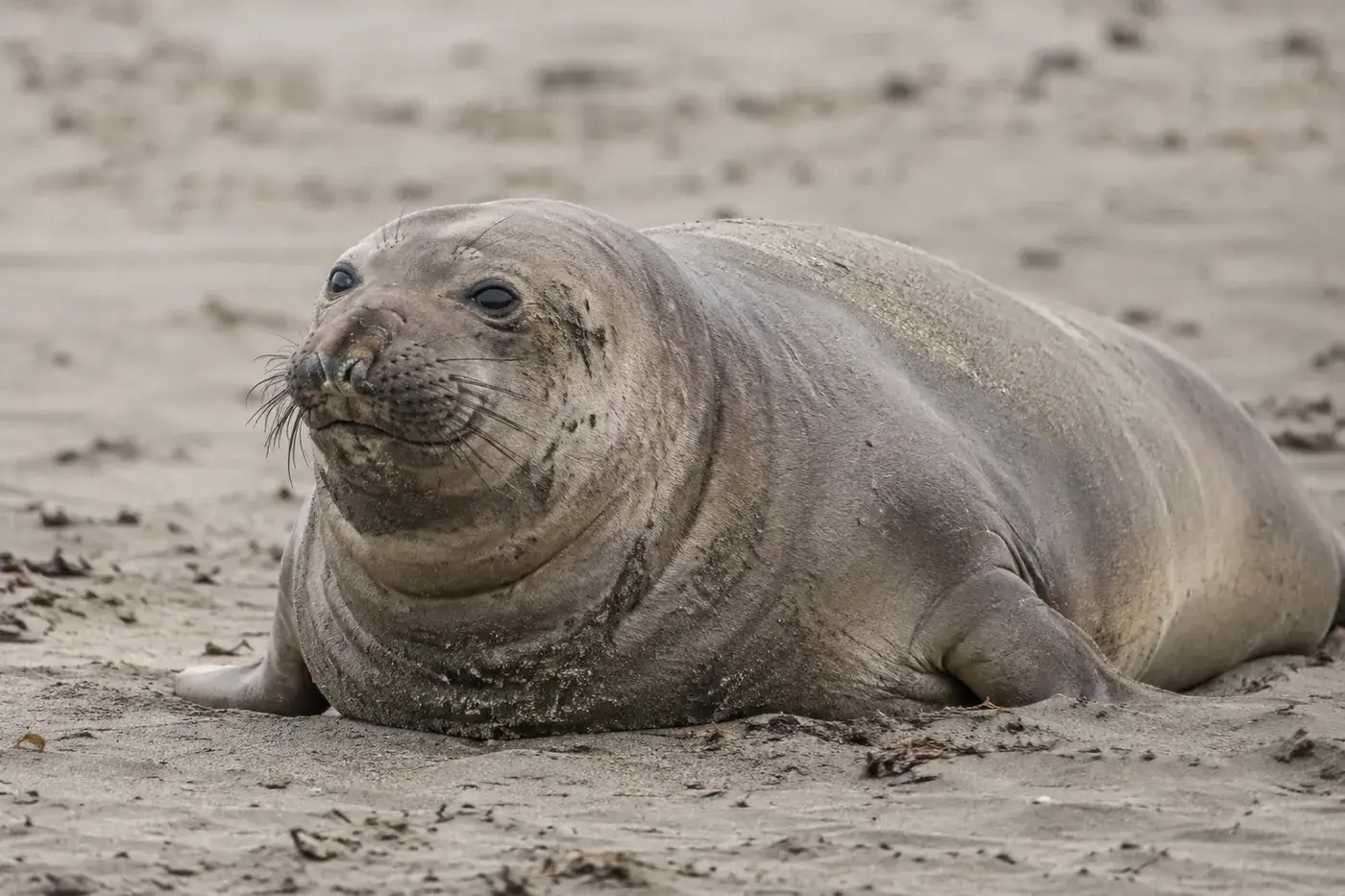
The first impression may be sheer size. Then you begin to notice the quieter details: an animal lifting its head, sand flicked across a back, or a cluster that looked motionless becoming unexpectedly busy. Give yourself time to watch without expecting constant action.
For Marin residents, this is a reminder of how wild the nearby coast remains. For visitors, it can be a highlight of a Point Reyes day without a strenuous summit hike. The best version is patient and respectful, with the animals’ space more important than your photo.
Resist turning the visit into a checklist of behaviors you must see. Births, nursing, resting, and interactions are natural events—not performances on demand. Some moments may be intense for young children; explain beforehand that these are wild animals living their lives.
Choose a season, then check the actual situation
Winter is the main planning window
The park’s FAQ identifies December through March as the period when elephant seals are most numerous at the Elephant Seal Overlook during pupping and mating. That makes winter a useful starting point, but not a promise of a particular number of animals beside the Drakes Beach parking lot.
Seals also return to shore for molting. Different times of year can mean different animals, behaviors, and viewing opportunities. Do not judge a quieter visit against a photograph taken at the height of breeding season.
Choose a day with manageable weather and enough daylight for the drive back. A stormy day is not automatically a better wildlife day. Coastal wind and rain can make standing still uncomfortable long before you have finished watching.
Do not borrow last winter’s opening hours
Drakes Beach access can depend on seal activity and staffing. The park’s regulations provide for closing the access road during breeding season when staff are not present to ensure safety.
Check current notices close to your visit, not just when you first plan it. If the information is unclear, contact the park through its official visitor-information pages. An old social post, map listing, or friend’s successful visit does not establish today’s opening arrangements.
Two viewing approaches—not a beach shortcut
Drakes Beach: follow the day’s designated viewing area
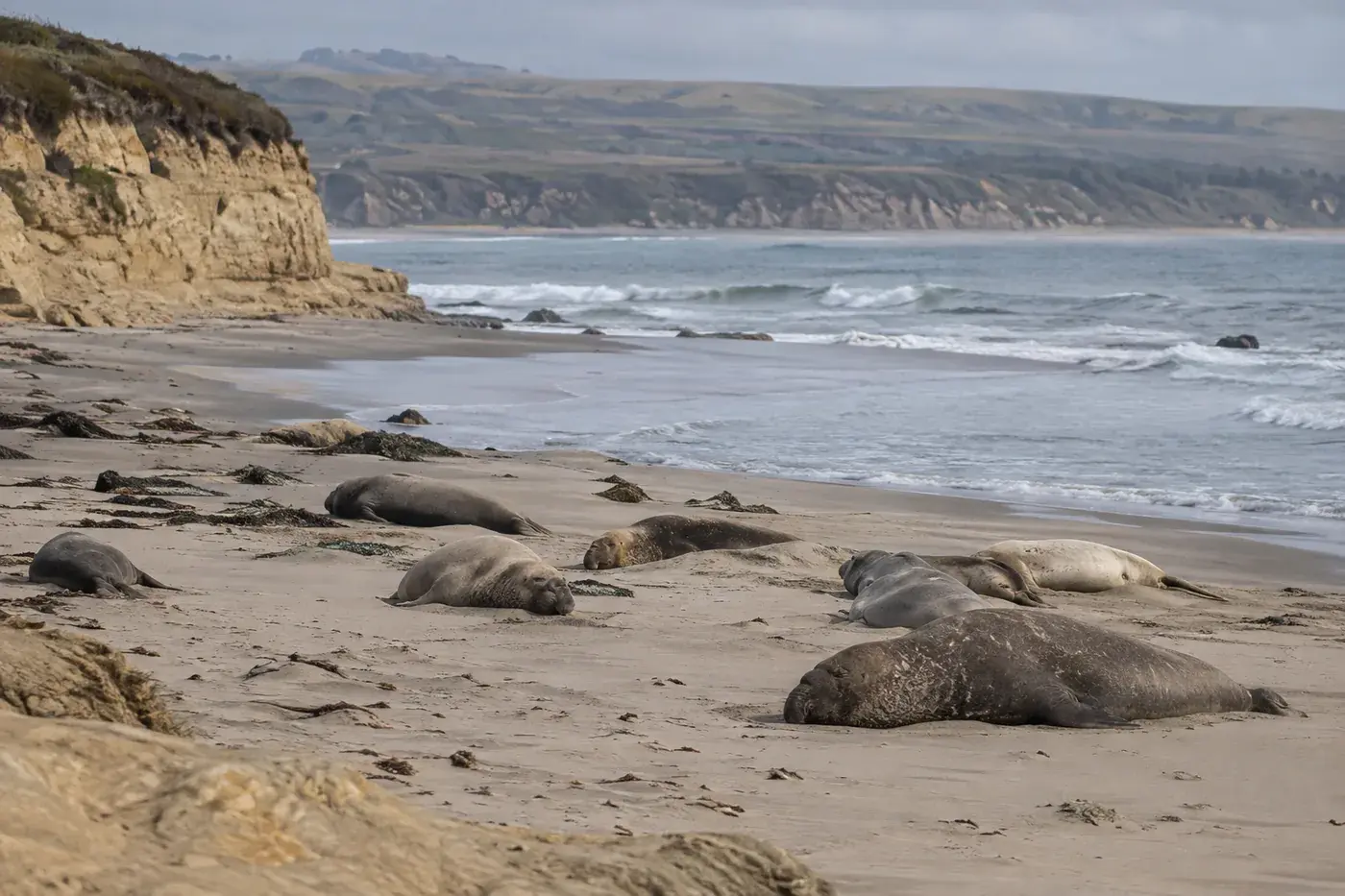
Navigate to Drakes Beach near the Kenneth C. Patrick Visitor Center, then follow current directions on arrival. When seals occupy the beach, viewing may be possible from the parking-lot side while the sand remains closed. Sometimes the wider area is closed too.
Read signs before unloading, park only where permitted, and ask a ranger or volunteer where to stand if one is present. Do not assume you can walk around a barrier because the animal you want to see is farther away.
Under the published protection rules, the western colony is closed year-round. Additional beach protection extends southwest from the visitor-center cove from December 15 to mid-June, and temporary closures can be broader. Use the official map and on-site boundaries, not an improvised route along the sand.
Chimney Rock: look down toward the colony
The Elephant Seal Overlook is reached from the Chimney Rock parking area by its own signed route. It offers a different way to observe the Drakes Beach colony from above. Bring binoculars rather than expecting close-up phone photographs.
Check that this route is open independently. Do not walk from Drakes Beach through a protected section to reach it, and do not confuse the overlook with permission to descend to the beach.
A short walk is not necessarily effortless for everyone. NPS describes deteriorated pavement on part of the approach and a crushed-rock overlook trail. Consider footing, wind, and your group’s mobility before committing.
Distance is part of the experience
Use binoculars, not your feet, to get closer
NPS specifies at least 25 feet from seals outside protection closures. Treat that as a minimum, not a target distance. Stay farther away whenever animals move, staff direct you to, or conditions require it.
Never surround a seal, block its path to the water, or stand between animals. If a seal approaches, give it room and follow staff instructions. A resting animal is still a powerful wild animal, not a safe backdrop for a selfie.
Keep voices low, do not feed or touch wildlife, and never attempt to return a pup to the sea. If you are concerned about an animal, alert park staff rather than intervening yourself.
Watch in daylight and leave the scene unchanged
The NPS viewing guidance prohibits using artificial lights to view wildlife. Plan a daylight visit; leave flash photography and spotlighting out of the experience.
Keep tripods and bags out of walkways. Take a few photographs, then spend some time looking without a screen. A longer lens can improve the picture, but no lens or social-media goal justifies crossing a closure.
Make it comfortable for the whole group
Families: explain the boundaries before arrival
Tell children that the goal is to observe, not approach. Pick a safe place to stand together, keep children close, and take a warm-up break before anyone becomes miserable. A short, attentive visit can be more memorable than an hour of waiting while cold.
Bring warm layers, a windproof or waterproof outer layer, comfortable shoes, drinking water, and snacks for an appropriate break away from the animals. Check facility information before depending on a visitor center being open.
Pets are prohibited on Drakes Beach and the Elephant Seal Overlook Trail. Make this a pet-free trip rather than planning to leave a dog in the car. Ask the park directly about service-animal arrangements if relevant.
Accessibility: confirm the view as well as the surface
NPS describes an accessible sidewalk on the beach-facing side of the Drakes Beach parking lot. Seasonal protective barriers can obstruct the view for someone seated in a wheelchair. An accessible surface therefore does not guarantee a useful seal-viewing angle.
Contact the park ahead if visibility from a seated position or a step-free route is essential. Do not substitute an unsafe position near the animals for an obstructed view. The best plan may be a different authorized viewing location or another date.
Leave time for the return drive
Give this outing a generous part of the day rather than squeezing it between distant reservations. Download directions before leaving reliable service, allow for winding roads, and do not rush to make up time after a slow drive.
Keep away from bluff edges and cliff bases, and remain alert to waves wherever an open beach section is involved. Watching seals does not remove ordinary coastal hazards. In an emergency, call 911 when possible and describe your exact location.
One wildlife stop can be enough
Keep a flexible Point Reyes day
If viewing is good, let that be the centerpiece. If access is closed or the weather turns, choose another safe, open destination or head back for a relaxed meal. Never treat a closure as a problem to solve by finding an unmarked approach.
For another day, our Tomales Point tule elk guide offers a very different wildlife outing. The Marine Mammal Center is a separate educational visit, while Limantour suits a flexible beach walk when its own conditions and restrictions allow.
Use Marin County, Town by Town to choose a food stop on your return. Do not feel obliged to fit all of Point Reyes into one afternoon.
Drakes Beach elephant-seal questions
When is the best time to see elephant seals at Point Reyes?
NPS identifies December through March as the most numerous period at the Elephant Seal Overlook during breeding and pupping. Seals also return to molt. Numbers and locations vary, so winter is a planning window—not a guarantee of seals beside the Drakes Beach parking lot.
Can I walk along Drakes Beach to reach the colony?
Do not walk into the colony. Its western area is closed year-round, with additional seasonal protection extending southwest from the visitor-center cove from December 15 to mid-June. Temporary restrictions can be broader. View only from areas currently open to visitors.
How far away should I stay?
NPS specifies at least 25 feet from seals outside protection closures. That is a minimum, not an invitation to approach. Respect larger posted or ranger-directed buffers, give moving animals more room, and never cross a barrier even if seals appear far away.
Can I bring my dog?
Pets are prohibited year-round on Drakes Beach and the Elephant Seal Overlook Trail. Plan a pet-free outing rather than leaving an animal in your parked car. Contact the park about service-animal access if needed.
What if Drakes Beach is closed?
Check whether the Elephant Seal Overlook near Chimney Rock is open as an alternative. Reach it from its own trailhead, not by walking through the closed beach. If access or weather is unsuitable, change the day rather than bypassing a closure.