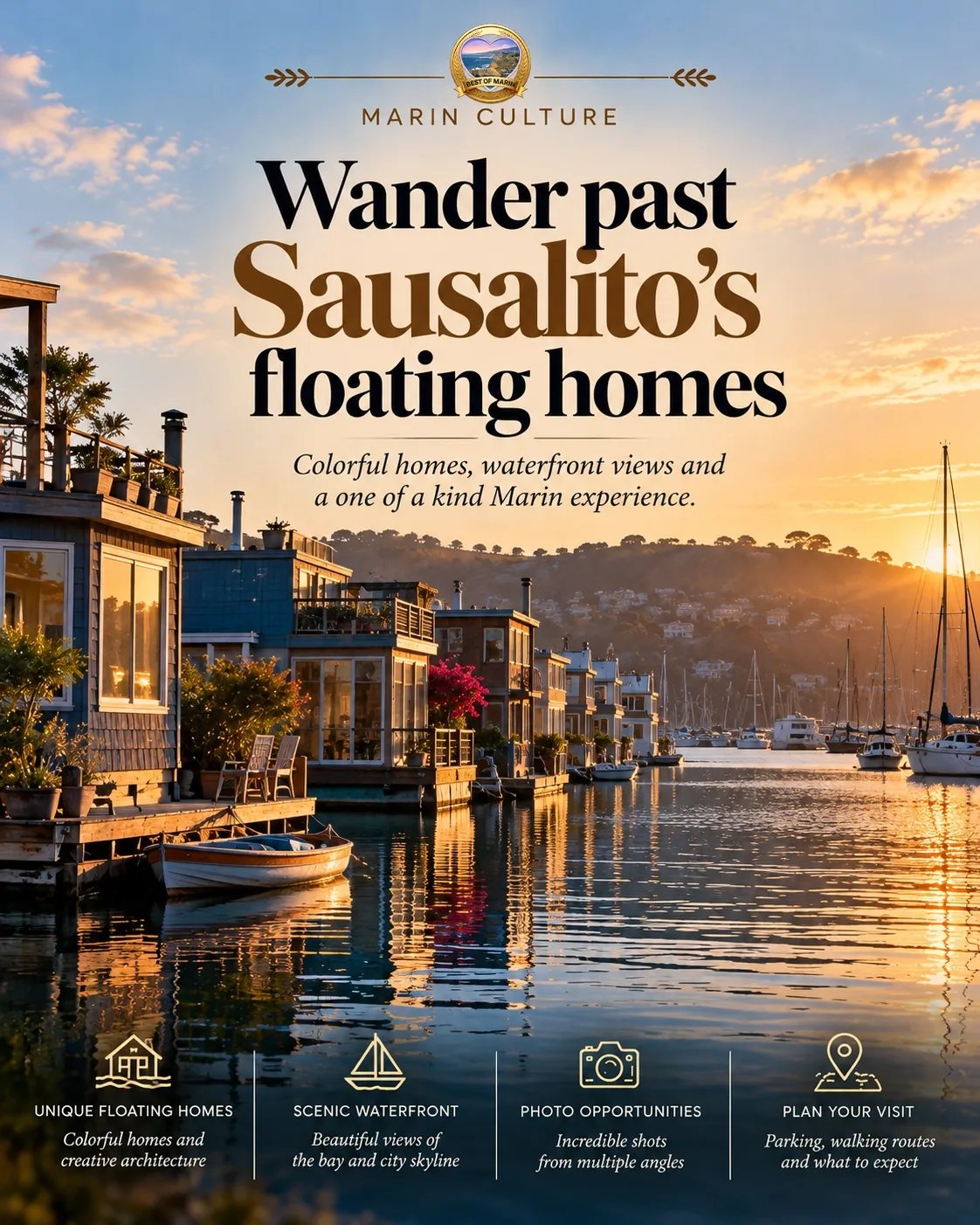
Wander Past Sausalito’s
Floating Homes
Reflections, inventive architecture, and everyday life on the water. Enjoy this distinctive neighborhood with curiosity—and the same consideration you would want outside your own front door.
By Best of Marin Staff · Reviewed
A different side of Sausalito
Look beyond the postcard waterfront
Downtown Sausalito has the bayfront promenade, ferry arrivals, and familiar city views. Farther north, the floating-home neighborhood offers a different rhythm: houses close to the water, reflections shifting with the breeze, and architecture that rewards a slower look.
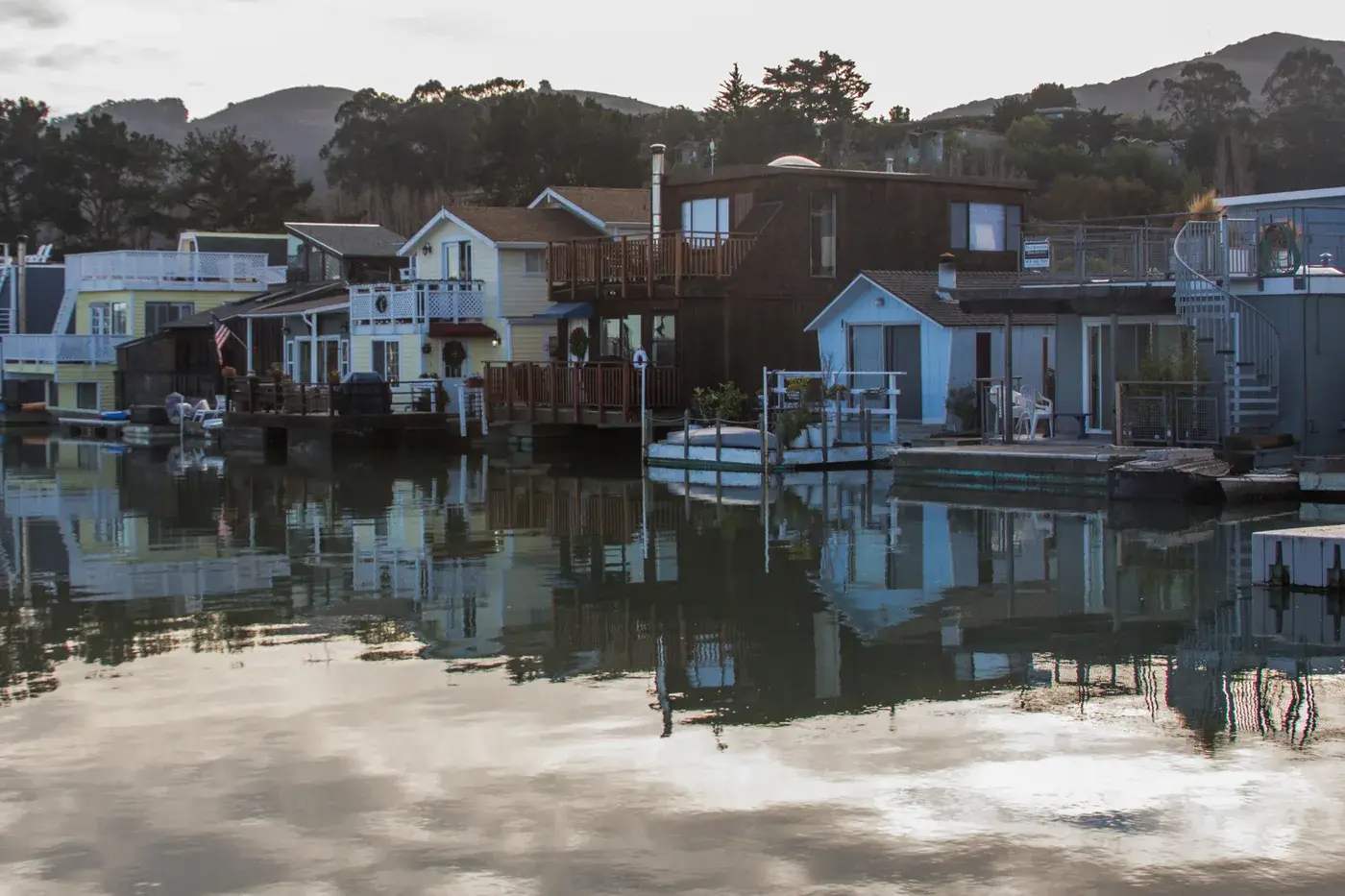
The pleasure is in the differences. Notice the rooflines, the mix of colors and materials, and the way a compact home makes room for outdoor living. You do not need to find a famous address or photograph every house to appreciate the place.
For residents of Marin, this can be a refreshing short outing close to home. For visitors, it adds context to a Sausalito day that might otherwise stay entirely downtown. Either way, the experience improves when you remember that people are doing ordinary things here—working, resting, carrying groceries—not hosting a continuous open house.
Know which part of town you are visiting
The floating homes are north of the ferry landing
Orient yourself around the northern Richardson Bay waterfront, including Waldo Point Harbor in the Gate 5 and Gate 6 area. Do not assume a ferry arrival downtown places you immediately beside the floating homes.
Before leaving, choose a clearly permitted viewing area or a confirmed tour meeting point. Review the whole journey, including your return. A map result for an individual home is not a visitor entrance, and a dotted walking route does not grant access to a residential dock.
If you arrive by ferry or transit, check current schedules and plan the onward connection separately. Give yourself enough time that a missed connection or longer-than-expected walk does not turn a gentle outing into a rush.
Parking deserves a little homework
Waldo Point Harbor is privately owned; its parking is not interchangeable with a public city lot. Follow posted visitor-space rules and do not use resident or permit spaces just because they are empty.
The harbor’s website describes guest permits for residents’ visitors. That is not a blanket tourist parking entitlement. If you are joining a tour, ask its organizer where your group should park before arrival.
For a separate downtown stop, use Sausalito’s visitor parking guidance and the signs at the actual space. Downtown parking information does not establish permission in a northern harbor lot. Keep loading areas, gates, and emergency access clear.
How a waterfront became a neighborhood
More than a collection of unusual houses
Waldo Point Harbor’s community history traces the area’s postwar evolution to the late 1940s, after wartime shipbuilding left materials and waterfront infrastructure behind. That setting helps explain why this part of Sausalito developed a character unlike a conventional subdivision.
Today, the Floating Homes Association represents residents across five floating-home marinas. The colorful exteriors are only one part of a functioning community with shared infrastructure, maintenance, and everyday responsibilities.
Think of the visit as an opportunity to notice a different relationship between homes and shoreline, not as a hunt for eccentric people. The neighborhood’s appeal does not depend on reducing its residents to a bohemian stereotype.
Floating does not mean drifting around the bay
The association’s living-on-the-water FAQ explains how homes use buoyant structures, how utilities connect to shore, and how residents own homes while renting berths. These are not simply pleasure boats that happen to have curtains.
Knowing a little of that makes the view more interesting: you begin to notice how access and everyday living adapt to water levels. Keep your curiosity observational, though. Do not inspect utility connections, handle equipment, or step onto private structures to see how they work.
How to be a welcome visitor
Let signs—not online enthusiasm—decide access
There is no universal permission in this guide to walk every dock. Stay on clearly public routes unless current signage or an authorized host expressly allows you farther. If access is unclear, ask the harbor or tour organizer rather than following someone through a gate.
Never enter a side gangway, deck, garden, or home without an invitation. Keep entrances clear and yield to residents moving through. If you are asked to leave an area, do so promptly and politely.
Keep the group small, voices conversational, and speakers off. Skip early-morning or after-dark wandering near homes. The most memorable visit can be a short one that leaves the neighborhood as peaceful as you found it.
Photograph the setting, not someone’s private life
Reflections and wider architectural compositions can tell the story without pointing into a living room. Take pictures only from places you are allowed to stand, and do not use a zoom lens to look through windows or over privacy screens.
Ask before photographing residents closely. Avoid lingering outside one home, blocking a path with a tripod, or turning a doorway into a posed-photo location. A home’s attractive exterior is not consent to stage a shoot on its property.
Leave drones out of this casual neighborhood visit. They introduce privacy, disturbance, and legal questions that a simple waterfront walk does not need.
Want to learn more? Arrange a hosted visit
An invitation changes what you can experience
At review, the Floating Homes Association advertises private guided tours for groups of 10–40, with potential visits inside one to four homes depending on group size. These are arranged experiences, not drop-in access.
Use the association’s request process to confirm availability, price, deposit terms, meeting point, mobility requirements, and what is included. Do not assume an older annual-tour date or ticket price still applies.
If you are visiting alone or as a couple, ask what current options exist; do not assume the private-group offering can accommodate a same-day walk-up. A respectful exterior visit is still worthwhile if no suitable tour is available.
Keep the outing easy and safe
Waterfront details matter
Wear shoes with traction and bring a layer for wind off the bay. Where access is permitted, watch for wet surfaces, uneven transitions, and gaps. Do not walk backward while framing a photograph.
Keep children close near water. If traveling with a stroller or mobility device, confirm a suitable route rather than assuming all ramps and dock widths will work. Water levels and maintenance can affect conditions.
Check pet rules for the exact route before bringing a dog, and do not assume marina restrooms are public. Plan water, snacks, and restroom stops in advance so you are not relying on residential facilities.
Pair it with one relaxed Sausalito stop
Allow roughly 45–90 minutes for a modest visit, depending on what is open and comfortable for your group. That is our planning suggestion, not a fixed walking circuit. Save time afterward for a meal or a separate public waterfront stroll.
Explore Sausalito for local options, or use Marin County, Town by Town to connect the visit with the rest of your day. Our Marine Mammal Center guide is another southern Marin outing, but it has its own visiting arrangements and deserves separate planning.
You do not need to add a second destination to make this count. Looking carefully, learning a little, and leaving without disturbing anyone is a complete and satisfying visit.
Floating-home visitor questions
Where are Sausalito’s floating homes?
The community is along the northern Richardson Bay waterfront, including Waldo Point Harbor around the Gate 5 and Gate 6 area. It is separate from downtown Sausalito and the ferry landing. Choose a permitted viewing area or a confirmed tour meeting point, not a private home address.
Can visitors walk onto every dock?
No blanket public-access permission should be assumed. Follow current signs and harbor rules; stay in clearly public areas unless access is expressly permitted. An open gate or a map pin does not make a residential dock public.
Can I see inside a floating home?
Only by invitation or an arranged tour that explicitly includes interior access. The Floating Homes Association offers private group tours; check current requirements and availability directly. Never knock on doors asking to look inside.
How long should I allow?
Our suggestion is 45 to 90 minutes for a modest exterior-viewing visit, plus travel and any meal stop. This is an editorial planning window, not a marked route. Tour duration and permitted routes are set by the organizer.
Is this an easy outing for everyone?
It can be a gentle visit, but dock access, gaps, wet surfaces, ramps, and changing water levels may affect mobility. Confirm a suitable route if step-free access is essential, supervise children near water, and do not assume harbor facilities are public.